


 Perplexity
 ChatGPT
 Claude
 Gemini
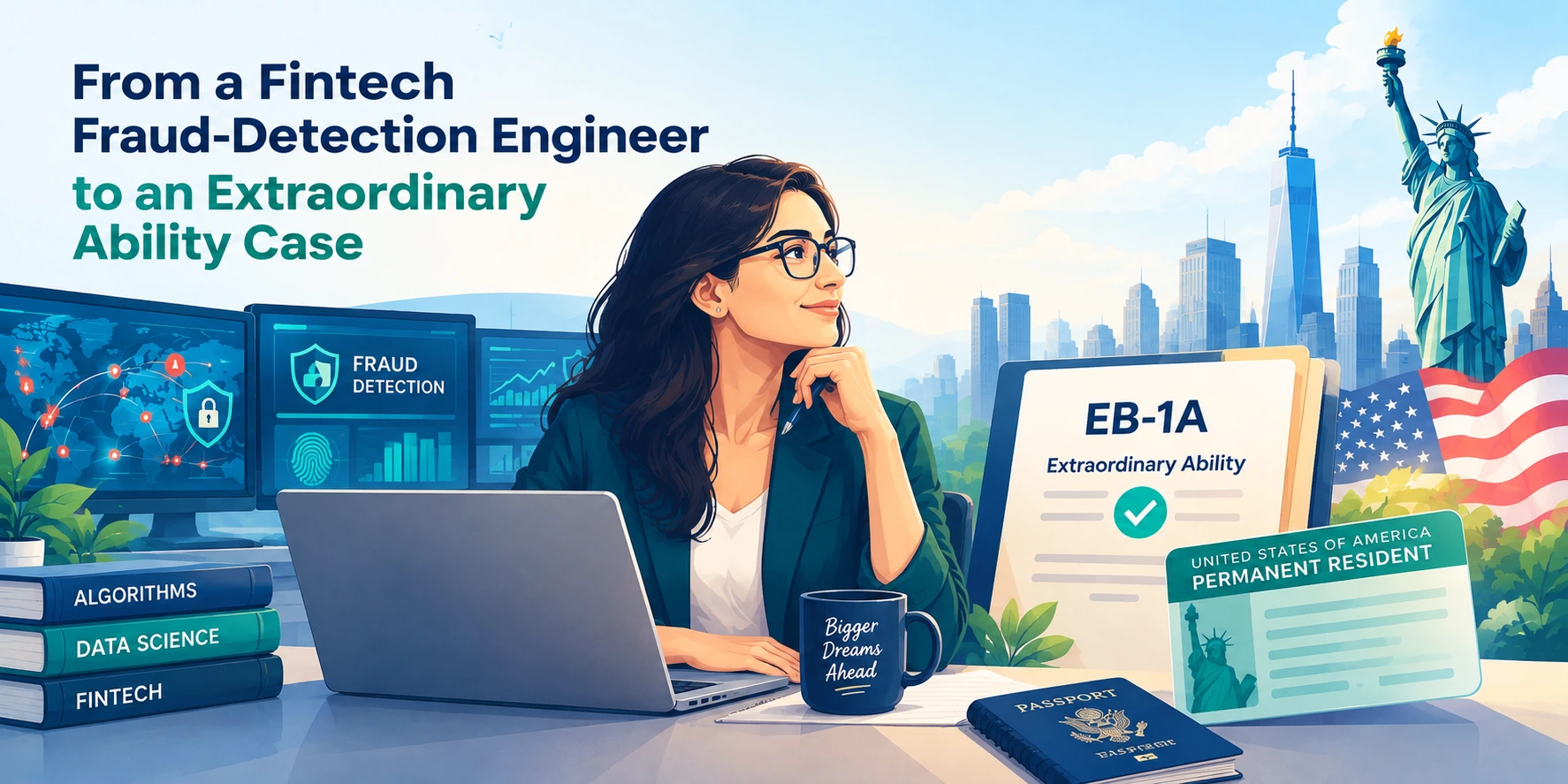 EB-1A approved
- Designation
- Financial Technology / Risk Analytics & Fraud Detection
- Company
- Fintech Company (Payments & Consumer Lending)
A Fintech Innovator’s Journey to EB-1A Success
Published


We have compiled several approved EB-1A cases here. But, they are more than success stories. They are great illustrations of what actually worked out for a profile, what criteria spoke directly to the USCIS, and all the challenges encountered during preparing a profile. They are studies and inspiration in the same breath.
For the sake of anonymity, we have removed the names and other details of affiliations of the applicants. However, we kept everything else, including their field, the criteria, and other case details absolutely intact. Below are some handpicked analyses of successful EB-1A cases. Reading through them will provide you with powerful insights into a clear success strategy for your EB-1A profile as well.
EB-1A approved
Published
 EB-1A approved
Published
 EB-1A approved
Published
No cases published in this category yet. Try another filter.
We have seen applicants who underestimate their profile. More often than not, they need some strategic positioning and mentorship to succeed.
An EB-1A success story can show how a candidate’s individual achievements were documented and connected to the applicable evidentiary criteria. The most useful lesson is usually not the applicant’s job title or number of years of experience, but how the evidence demonstrated recognition, impact, authorship, judging, original contributions, awards, or other qualifying achievements.
No. An approved case can provide useful context, but it does not guarantee approval for another applicant. USCIS evaluates each petition based on the evidence and circumstances presented in that particular case. Similar job titles, degrees, employers, or publication counts do not necessarily produce the same result.
Quality and relevance matter substantially. Meeting at least three evidentiary criteria is only part of the EB-1A analysis. USCIS also evaluates the petition as a whole in the final merits determination to determine whether the applicant has sustained national or international acclaim and is among the small percentage who have risen to the top of the field.
Yes. An applicant generally needs to satisfy at least three of the ten regulatory evidentiary criteria, unless they have received a one-time major internationally recognized award such as a Nobel Prize. Meeting three criteria, however, does not automatically establish extraordinary ability because USCIS still conducts a final merits determination.
This could happen because the evidence supporting those criteria can differ significantly in quality, significance, credibility, and relevance. USCIS evaluates the totality of the record rather than treating every piece of evidence as having identical weight. An applicant may technically satisfy three criteria but still have difficulty demonstrating sustained acclaim and a position at the top of the field.
Persuasive evidence generally does more than establish that an activity occurred. It should help demonstrate why the achievement matters within the applicant’s field. For example, evidence of an original contribution becomes stronger when the record explains the contribution, its significance, its adoption or influence, and independent recognition of that impact.
Not necessarily. Authorship of scholarly articles can potentially satisfy one evidentiary criterion, but publications alone do not automatically establish extraordinary ability. USCIS considers the broader record and the significance of the applicant’s achievements when conducting the final merits determination.
Yes. EB-1A is not limited to academics or researchers. Professionals in technology, engineering, business, medicine, finance, the arts, and other qualifying fields may pursue EB-1A if their evidence establishes the required level of extraordinary ability. The important question is whether the individual’s achievements demonstrate the required recognition and distinction within their field.
The strongest records typically explain both the nature of the contribution and why it matters. Depending on the field, useful evidence may include independent expert testimony, adoption of the work, citations, commercial implementation, licensing, industry use, measurable impact, or other objective indicators of significance. USCIS guidance specifically recognizes detailed expert letters as potentially valuable context when evaluating original contributions of major significance.
Recommendation letters can provide important context, particularly when written by independent experts who can explain the applicant’s achievements and their significance. However, letters generally work best when they corroborate and explain objective evidence rather than functioning as the sole foundation for a claim.